
“`html
You’re probably familiar with the concepts of responsible and sustainable tourism, and you may also have heard about transformative tourism, slow tourism or positive impact tourism. But what is considered regenerative tourism? Is it just another buzzword?
Índice de Contenidos
- 1 Introduction to Regenerative Tourism.
- 2 The origins of regenerative tourism.
- 3 – The difference between regenerative tourism and responsible and transformative tourism.
- 4 – The difference between regenerative tourism and sustainable tourism or development.
- 5 – The difference between regenerative tourism and positive impact or transformative tourism.
- 6 – Regenerative tourism: who is talking about it?
- 7 Regenerative tourism: is it just words?
- 8 Tourism and regeneration: measuring success.
- 9 Regenerative tourism: a summary.
Introduction to Regenerative Tourism.
Regenerative tourism has been drawing particular attention although it has existed for quite some time. Who wouldn’t want businesses to evolve in a healthier way and help heal the damage this pandemic is causing to the economy?
Since tourism generally contributes around 10% of global GDP and employment, it is estimated that the COVID-19 shutdown will cause losses in the sector of 121 million jobs and 3.4 trillion dollars (World Travel & Tourism Council, 2020).
Regenerative tourism is being presented as a return to smarter, greener, less overcrowded tourism. It is largely based on rebuilding the “industrial” model that tends to prevail in most tourist destinations.
It defines success as a net benefit: added value rather than volume—although regenerative tourism is not anti-growth; it simply calls for orderly management that benefits the whole system instead of privileging some over others.
As José María de Juan points out in this La Vanguardia article: “If the prevailing model is to travel to Morocco because the flight is very cheap and, once there, stay in an Airbnb that might be owned by a Californian, before returning with a handicraft made in China—then of course that isn’t sustainable, nor is it probably even tourism.”
The origins of regenerative tourism.
“Regenerative” describes processes that restore, renew, or revitalize your own sources of energy and materials through the principles of living systems and nature itself.
“In its simplest form, regeneration is about creating fertile conditions that enable life to flourish” – Anna Pollock, 2019.
Companies that embrace regenerative tourism thrive while contributing through the application of design, culture, and the promotion of living systems. Regenerative design uses whole-systems thinking to create resilient and equitable systems that integrate society’s needs with nature’s integrity. (Wikipedia)
It is not about separation, but about the sum of nested, interdependent systems in constant evolution.
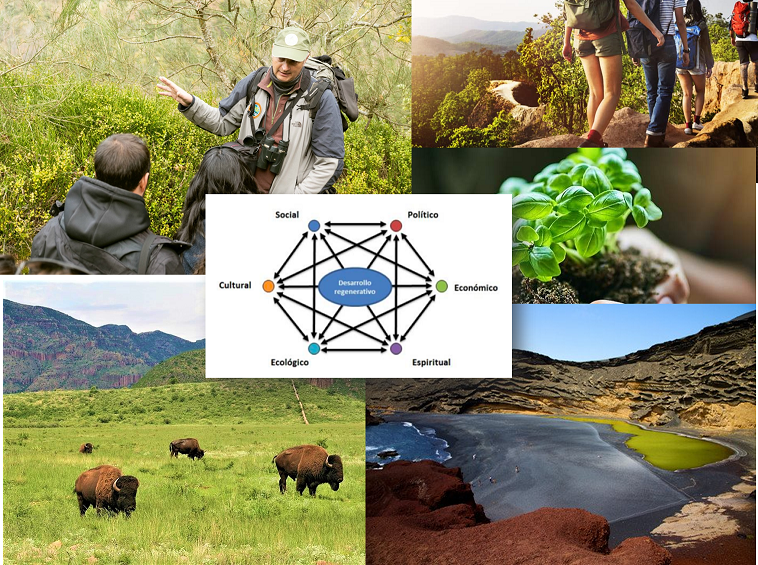
It has been influenced by approaches found in biomimicry, ecological economics and the circular economy, social movements such as permaculture, transition systems such as restorative justice, reconstruction, and regenerative agriculture.
It is not about growing volume—which ultimately creates negative impacts—but about doing things “better”, to “create value beyond economic growth” (Elke Dens, marketing director at Visit Flanders, via Jenny Andersson, 2019 ).
Regenerative agriculture describes farming practices that aim to restore soil biodiversity, thereby reversing climate change and improving the water cycle. ( Regeneration International )
As (Hutchins and Storm, 2019) note; “regenerative business enriches life—ourselves, our customers, and the broader ecosystem of stakeholders. Materially benefiting customers while damaging the fabric of life is an old short-term logic that is not viable for thriving in the years ahead.
Regenerative culture takes a holistic approach to the wellbeing of the entire ecosystem in which human beings live, creating thriving communities managed by the ecosystem’s own inhabitants.
Definition of regenerative tourism.
Regenerative tourism creates the conditions for life to continuously renew itself, evolve into new forms, and endure under constantly changing living conditions through tourism. It is a way of seeing the world as something alive, not as a money-making machine.
Therefore, it adopts a holistic approach to wellbeing across the entire tourism ecosystem in which communities live. Everything is connected, and tourism that neither respects nor understands the feedback loops within the system in which it operates will ultimately erode capital—and with it, the wellbeing and health of the system.

Tourism is not only a sector, but a social dynamic. Regenerative tourism recognizes that its communities and places are living systems, in constant interaction, evolution, self-organization, efficiency, learning, differentiation, and balance-creation to sustain other forms of life, resilience, and contribute to a broader system of wellbeing. We could say that regenerative tourism management makes it possible to leave a place better than it was found.
Going against years of tourism management and marketing focused on attracting consumer demand, regenerative tourism focuses on the supply side—host communities and ecosystems—rather than only the needs and desires of visitors from a market-demand approach.
– The difference between regenerative tourism and responsible and transformative tourism.
While responsible tourism proposes creating better places for people to live in and for people to visit, taking responsibility for impacts, regenerative tourism considers the connections with living systems that occur beyond the tourism experience itself.
– The difference between regenerative tourism and sustainable tourism or development.
Sustainable tourism could be said to set a lower “status quo” bar: it is sustainable as long as a place does not get worse. Sustainability is not enough to face the greatest threats we have: climate change, biodiversity loss, water scarcity. Regeneration goes beyond sustaining.
Regeneration is not only about incremental improvements; it is about real systems change toward a new approach. It is about regenerating the life that is dying—like our systems that have proven not to work.
– The difference between regenerative tourism and positive impact or transformative tourism.
While much of the industry is waking up to sustainability, having focused entirely on consumer demand, the regenerative approach is on the supply side—unlike more personal transformative tourism.
By providing a regenerative experience—intentional and meaningful by definition—regenerative tourism has the ability to transform habitual everyday human thinking, by seeing things differently in a different environment with businesses run in different, more systemic ways—like nature, which is relationship-based.
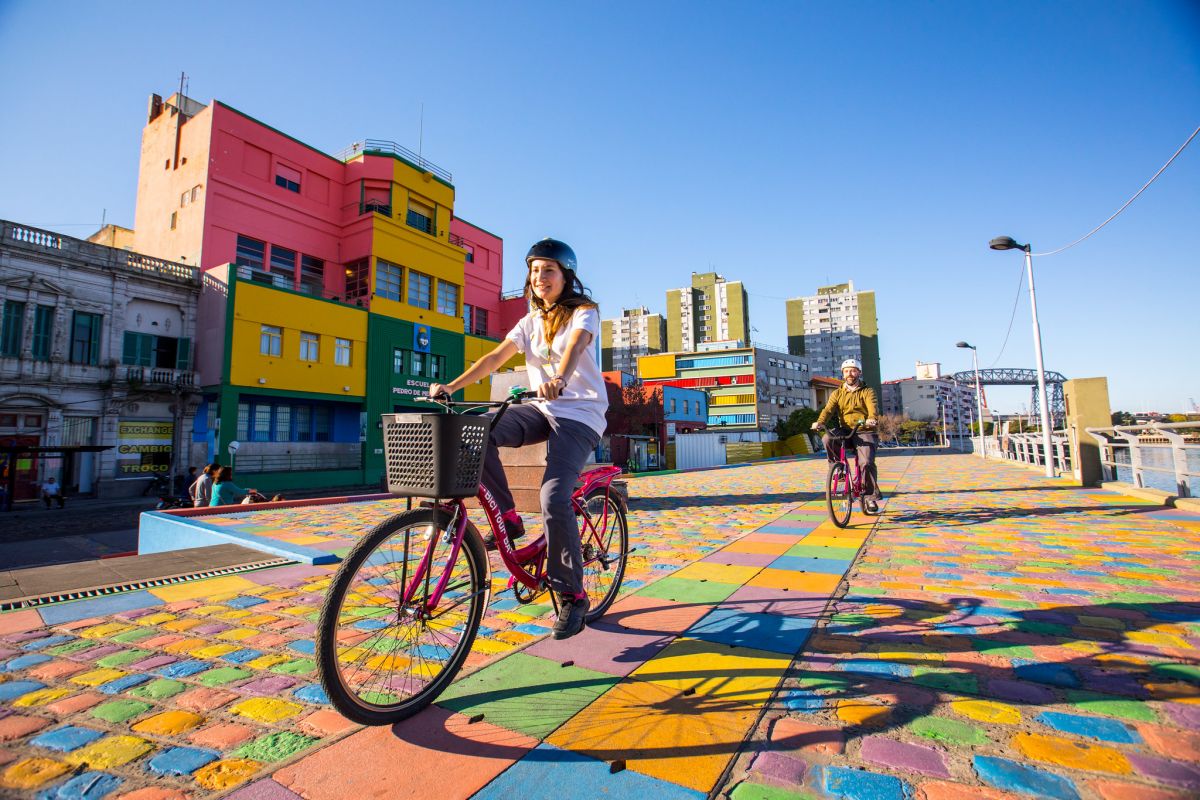
In tourism, the main source of value lies in nature and in the quality of the encounter between two parties—the guest and the host—which takes place in a unique setting: the place. A regenerative approach would allow that to become an exchange. In many ways, it goes back to the roots of the words we use: hospitality—to make people whole again.
So while it certainly has a transformative, life-changing aspect for visitors, it is the host ecosystem that remains at the center.
That is why we call what we do “positive impact tourism”. A purposeful positive change and a balance between the needs of the supply side and the desires of demand. Thinking from the perspective of the survival and wellbeing of living ecosystems by their very nature.
– Regenerative tourism: who is talking about it?
All sectors of the economy are undergoing a shift toward a regenerative approach. And that means all destinations will need to consider how to foster a regenerative culture.
We need the vision to see where we want to go and ask ourselves: what can tourism do to contribute to our destinations? How can we move away from the mass tourism model and opt for ways to manage visitor volume so that it truly serves our communities with net benefits?
We can ask the question at a global level, but it can only happen locally, since each place will have a unique set of answers rooted in its own culture, community, and ecosystem.
In tourism, this is the conveyor belt of mass movement of people, often driven by the goals of tourism bodies within national, regional, or local governments—pushing for ever-increasing volumes that should instead be diversified into lower, better-planned volumes.
At Visit Flanders, the first question they asked as part of their Tourism Transformations project was: How can we change our visitor economy from extractive to regenerative to generate more net value of a social, cultural, biophysical, and financial nature?
The shift in focus shown in the video above recognizes places as living communities with stories and patterns of vitality and inclusion—woven from narratives shaped by experience, feedback, renewal, and the transformative power of travel.
In regenerative businesses, everyone receives behind-the-scenes support in their capacity to thrive: Visit Flanders’ “Holiday Participation Center” focuses on ensuring that all citizens of Flanders have the right and access to a holiday, regardless of disability or poverty.
Visit Flanders defines carrying capacity as a capacity to care, and this is something they actively measure—not by considering visitor satisfaction in a destination, but the community’s feelings toward tourism. They use qualitative metrics such as civic pride.
Another example is New Zealand, where Indigenous knowledge and Māori culture play an important role in tourism. Tikanga is a Māori concept that means culture, custom, ethics, etiquette, fashion, formality, tradition, manner, meaning, mechanism, method, protocol, style… or, in general, “the Māori way of doing things”. One of the core principles of Tikanga is ‘kaitiakitanga’: guardianship or conservation, which aligns with regenerative culture that values and incorporates Indigenous knowledge. In fact, New Zealand is in a unique position to be led by Māori and to work collaboratively and in partnership in the spirit of Te Tiriti o Waitangi (the Treaty of Waitangi, an agreement signed in 1840 between the British Crown and representatives of Māori iwi and hapū).
The strategy of Bay of Plenty “Te Hā Tapoi – the love/essence of tourism” became even more relevant.
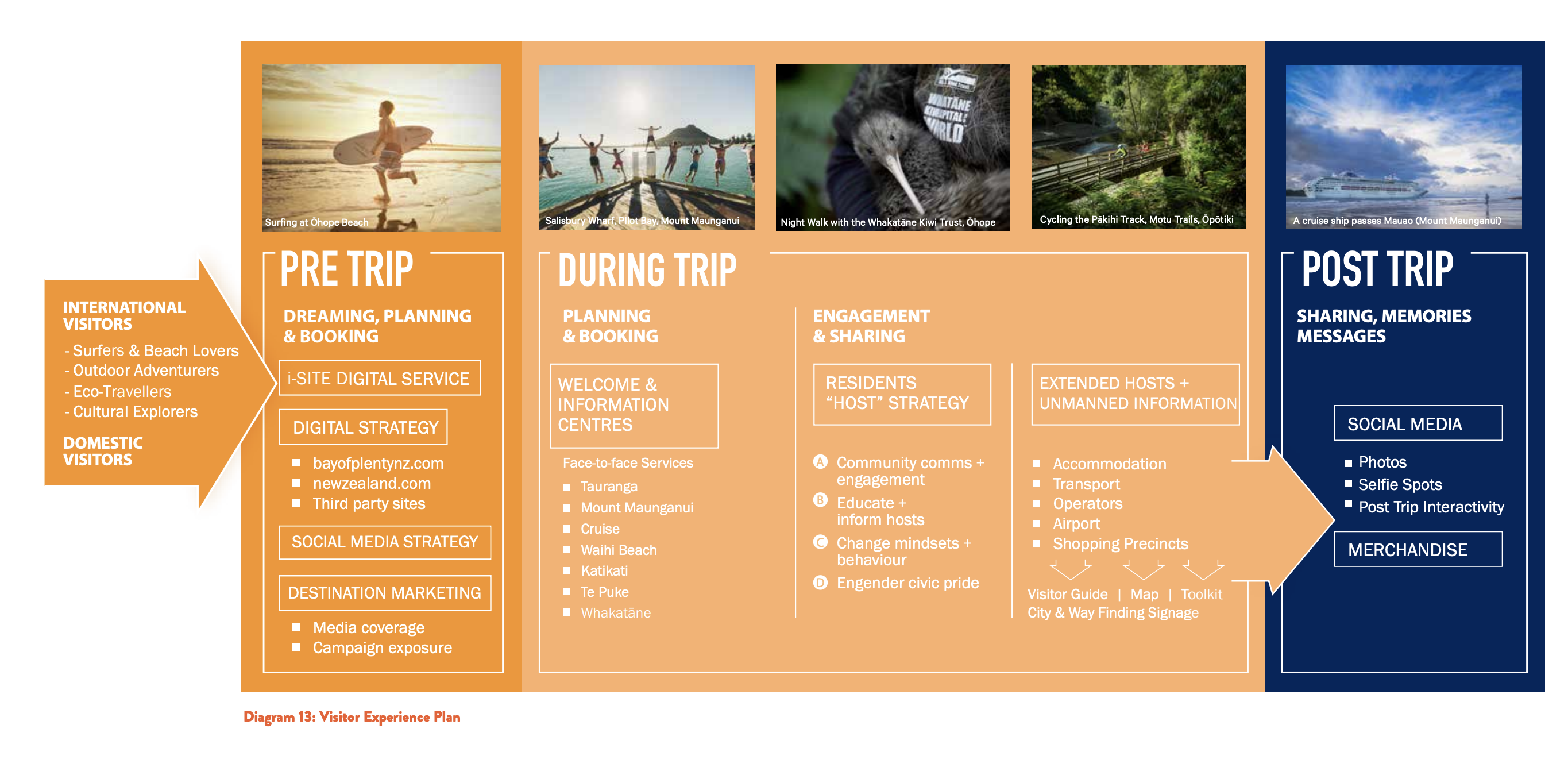
The opportunity offers is to realize that previous perspectives on what tourism is may no longer be appropriate—precisely at a time when the regenerative movement offers a new perspective.
Regenerative tourism: is it just words?
Language matters. Tourism—or even the visitor economy—puts emphasis on the visitor, their spending, and the industry. But what if it were called a “host economy”, focused on the local host community? Would that bring more respect from tourists and greater local awareness?

With the arrival of the internet, tourism has lost its human connection, replaced by databases, algorithms and the language of machines. Regenerative tourism finds the focus and emphasis that bring a different perspective, human values and differentiating values.
Tourism and regeneration: measuring success.
The regenerative movement is not only about a change of purpose, or a new perspective on living systems and their vitality; it is a paradigm shift that, by definition, needs new measures of success. Countries are looking beyond GDP measures toward the wellbeing of their people.
In New Zealand, they have developed the Living Standards Framework, a perspective on what matters for the wellbeing of New Zealanders now and in the long-term future. It includes:
- 12 domains of current wellbeing outcomes.
- 4 capitals that support wellbeing now and in the future: natural capital, human capital, social capital, financial and physical capital.
- Risk and resilience.
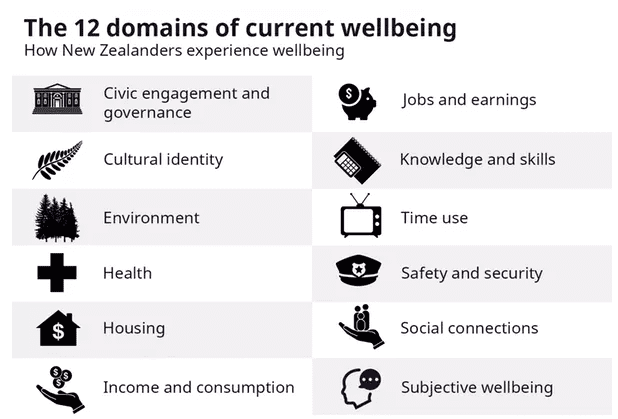
What this means is that each ministry has to demonstrate that its actions increase wellbeing and the four capitals that support it, which encourages thinking about the impacts and implications of policies. It complements—rather than replaces—the other analytical economic tools and frameworks used by the Treasury.
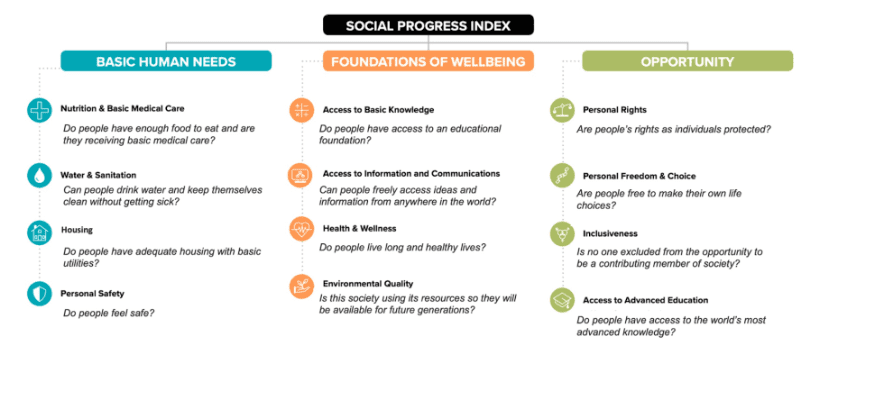
- In Costa Rica, the Social Progress Index is used to measure the effects of the tourism industry on local communities—the first application of the Social Progress Index to assess the social impact of an important economic sector (elsewhere, it is used at regional level to guide support, such as EU investment in disadvantaged areas, charitable donations from Indian states, or multinational supply-chain sustainability efforts in Brazil).
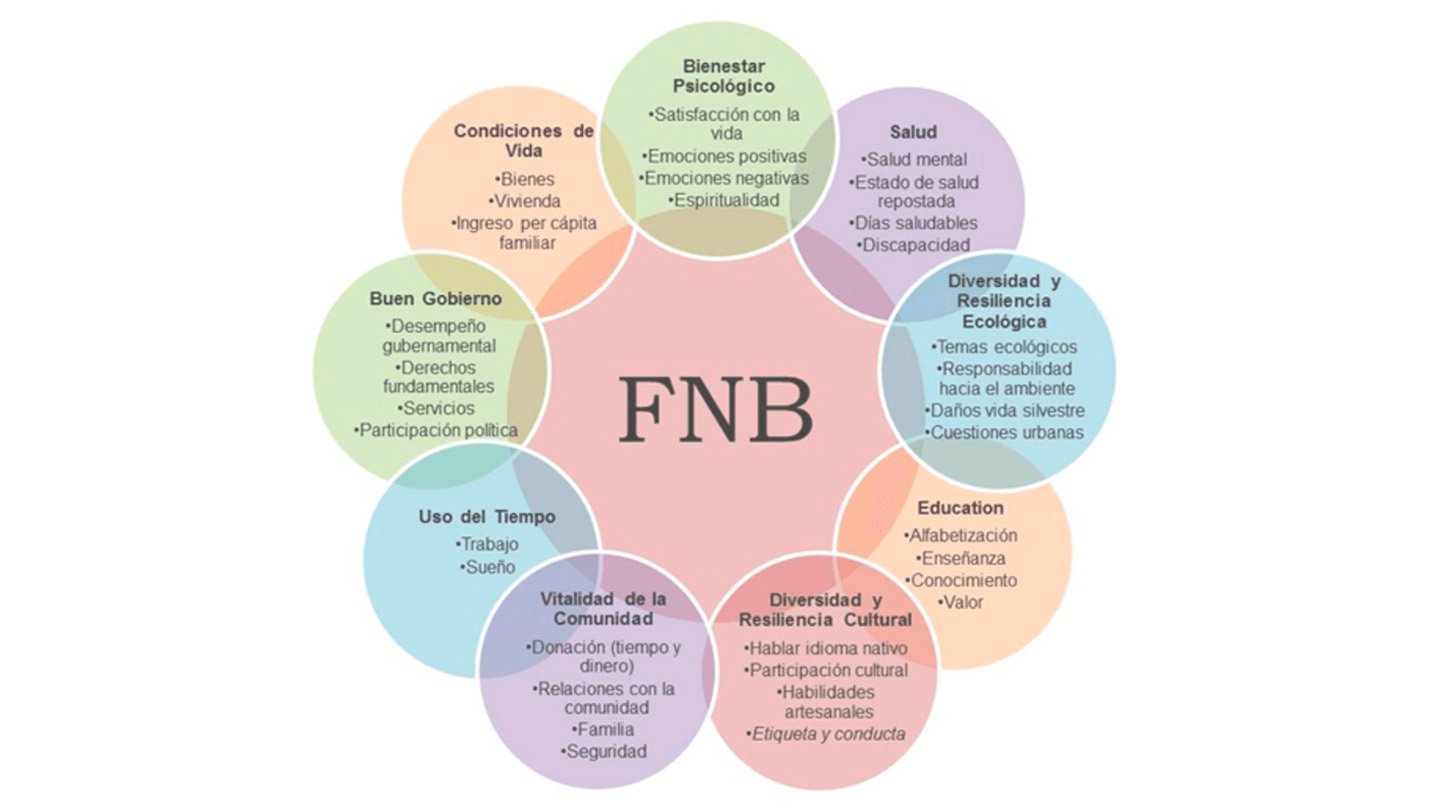
- In Bhutan, they designed their gross national happiness statistic to replace GDP as a tool for measuring progress or development. The level of GNH for an individual and for Bhutan as a country is determined through measures across nine domains, all based on wellbeing.
- The Netherlands adopted “Doughnut Economics”, as a “revolutionary alternative to the growth economy” (George Monbiot). The inner ring represents minimum living standards derived from the UN Sustainable Development Goals, and the outer ring represents ecological limits within which the world must operate (but is currently overshooting). The space between the two is where we need to live: where economic activity meets everyone’s basic needs, but within the means of the planet. In April 2020, Amsterdam formally adopted it as the starting point for public policy decisions, becoming the first city in the world to make such a commitment.

Regenerative tourism: a summary.
With the shutdown of international tourism, the economic situation is dire for communities that balance their income with tourism. Now is the time to redirect the sector toward a more sustainable and conscious path.
Regenerative tourism is not just a new tourism term; tourism is part of a regenerative movement that influences every sector and works by reconnecting people to each other, to community and to nature—something we learn in the hardest times.
In short, the movement is there, the desire is there, the need is there, and the opportunity is there—for tourism to contribute to human wellbeing and prosperity.
“`